Driveway Pavers San Diego

Built for the Weight It Carries

Paver, stamped concrete, and permeable driveways on a base designed for vehicle loads, slope, and drainage.

Driveway Design and Pavers

The Only Surface That Carries a Car

A driveway is the only surface on your property that a two-ton vehicle parks on, turns on, and brakes on, every day. Almost everything that fails on one traces back to a base that was built for a patio instead.

Base depth, compaction, edge restraint, and the laying pattern are all decided before the first unit goes down.

Underneath that, the subgrade gets compacted to spec. A perfect paver field over soft ground is a rutted driveway in the making.

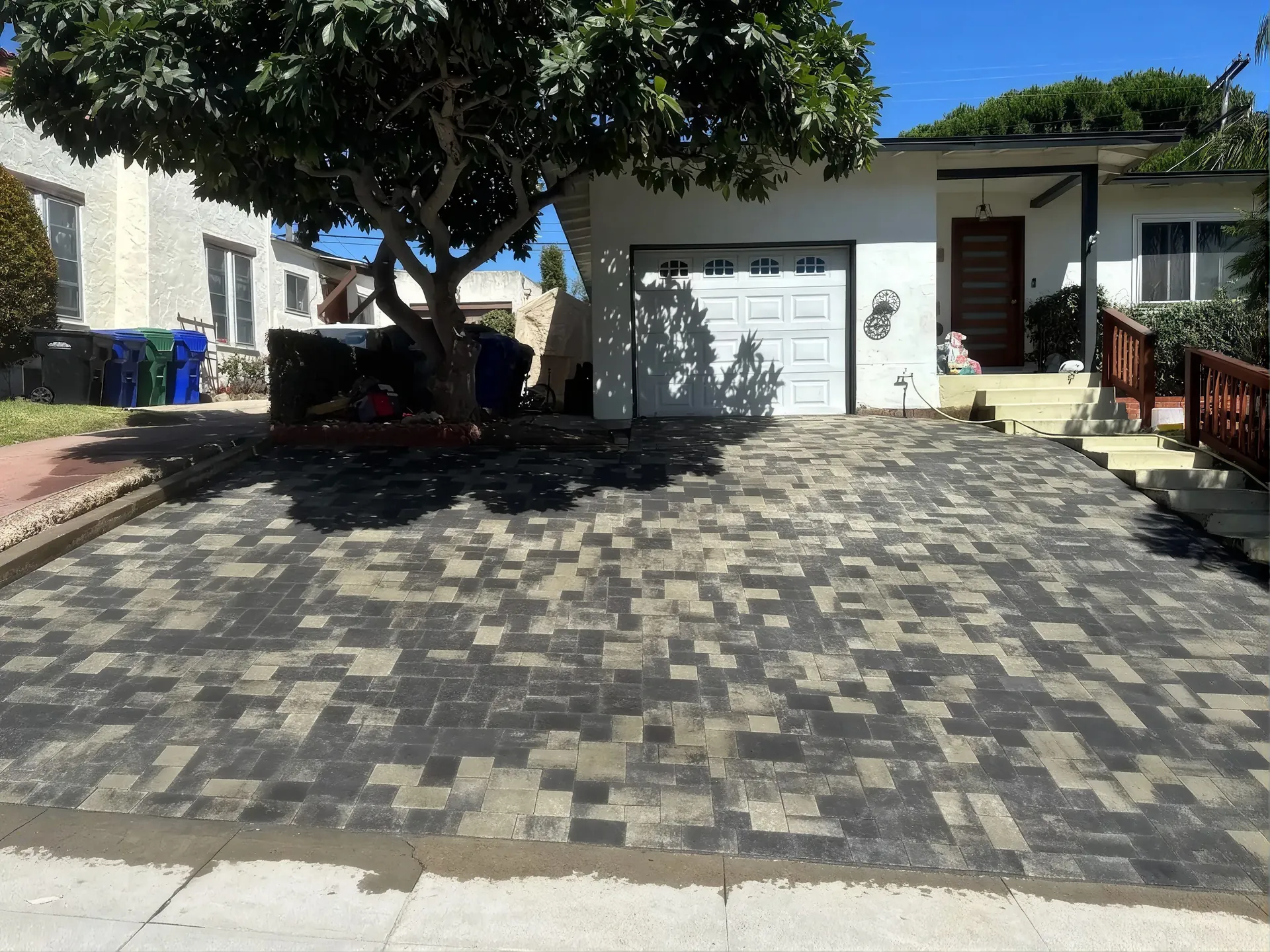
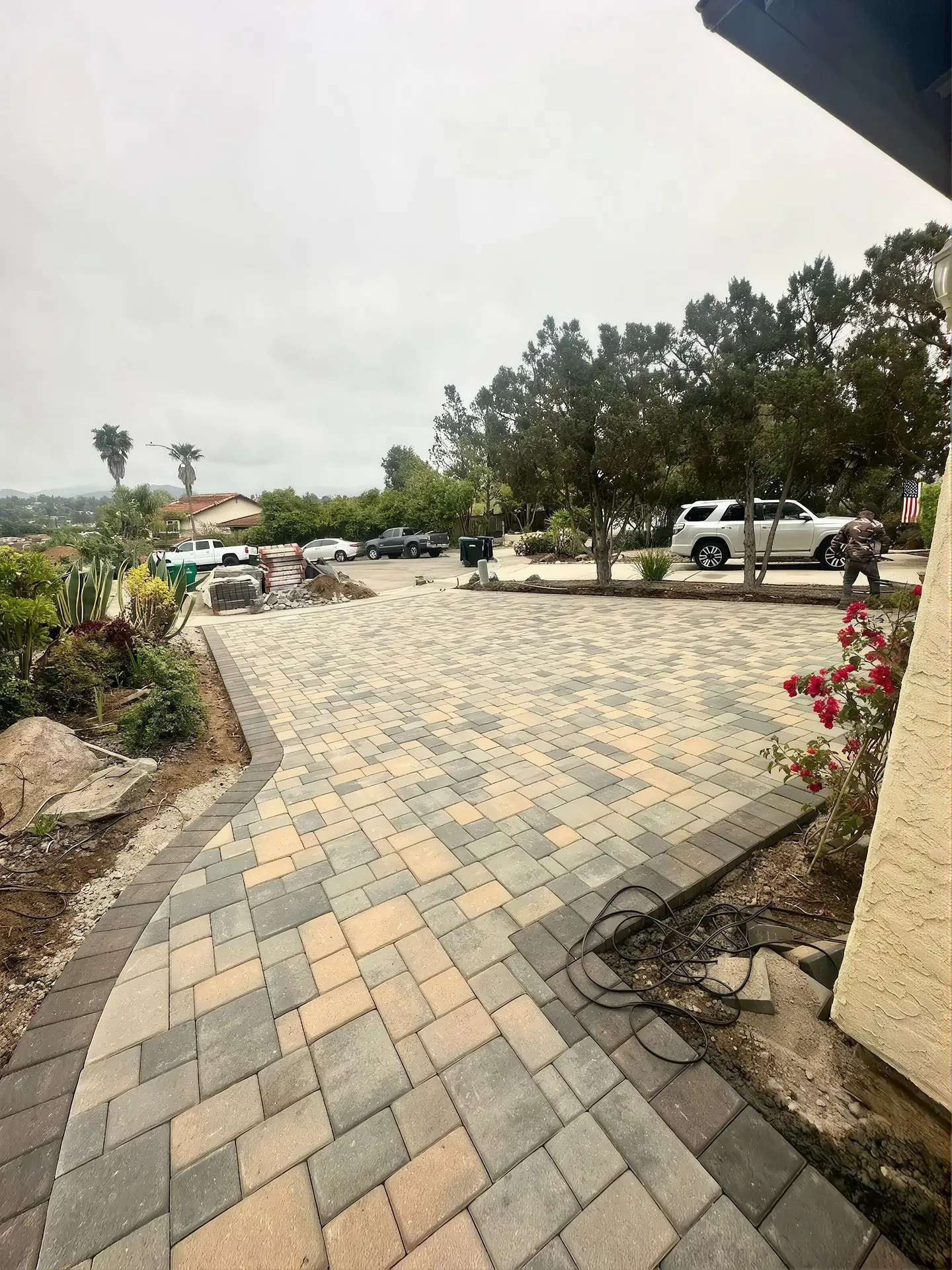
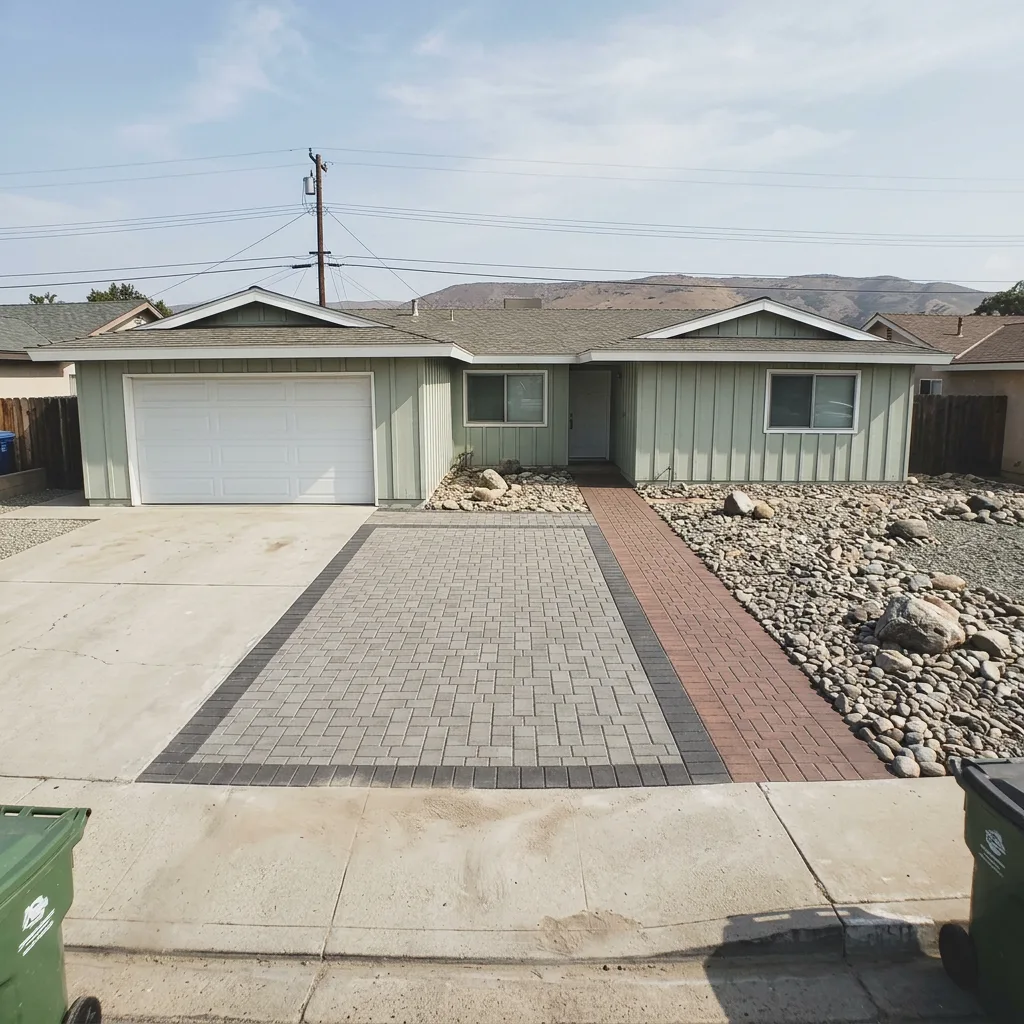
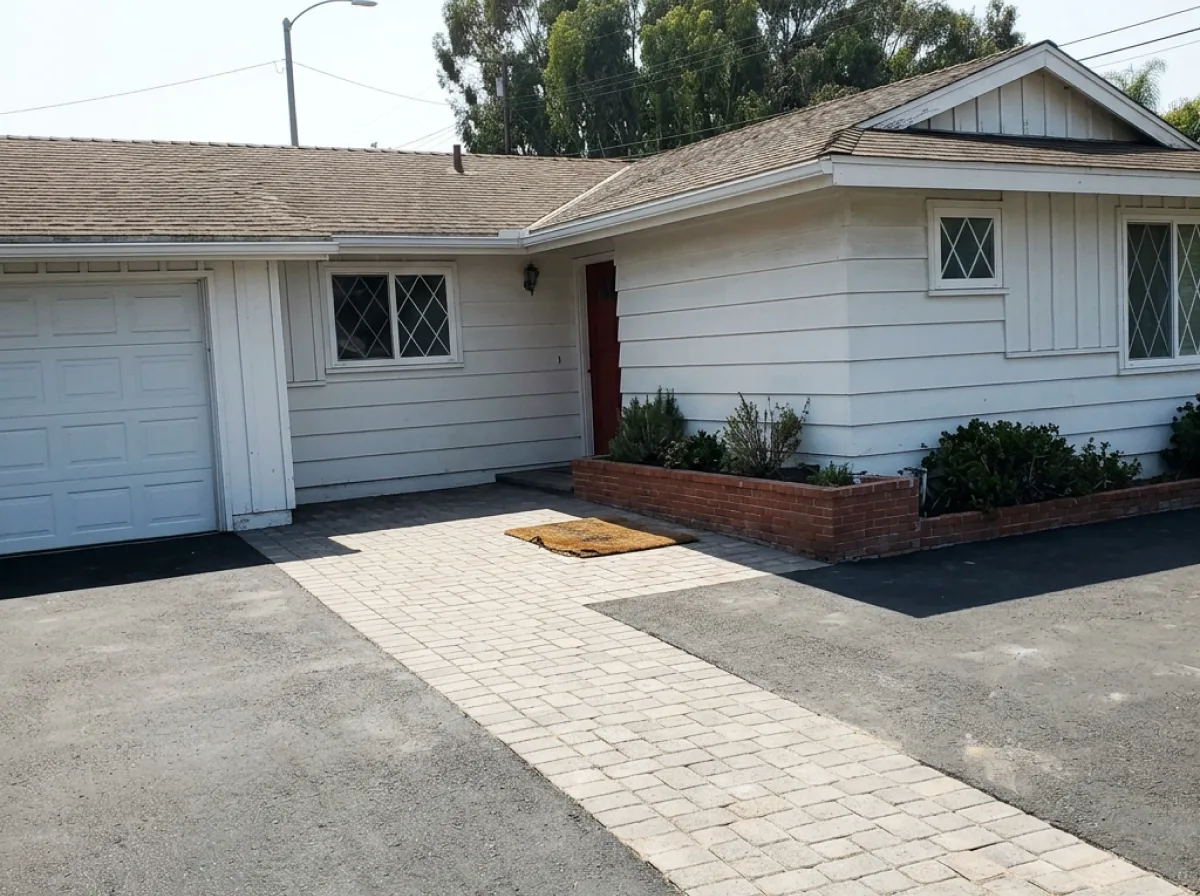
P-01 · Studio Paver driveway beside a narrower paver walkway at a San Diego County home
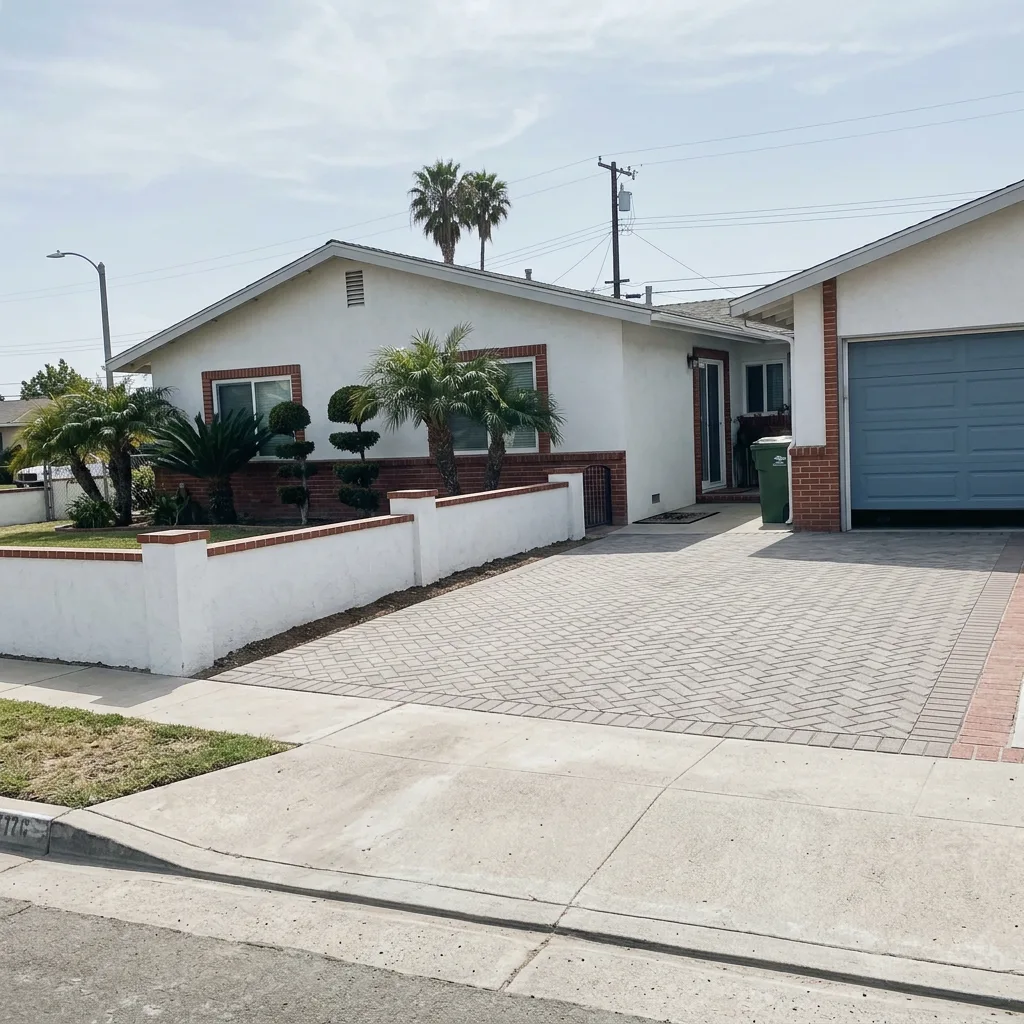
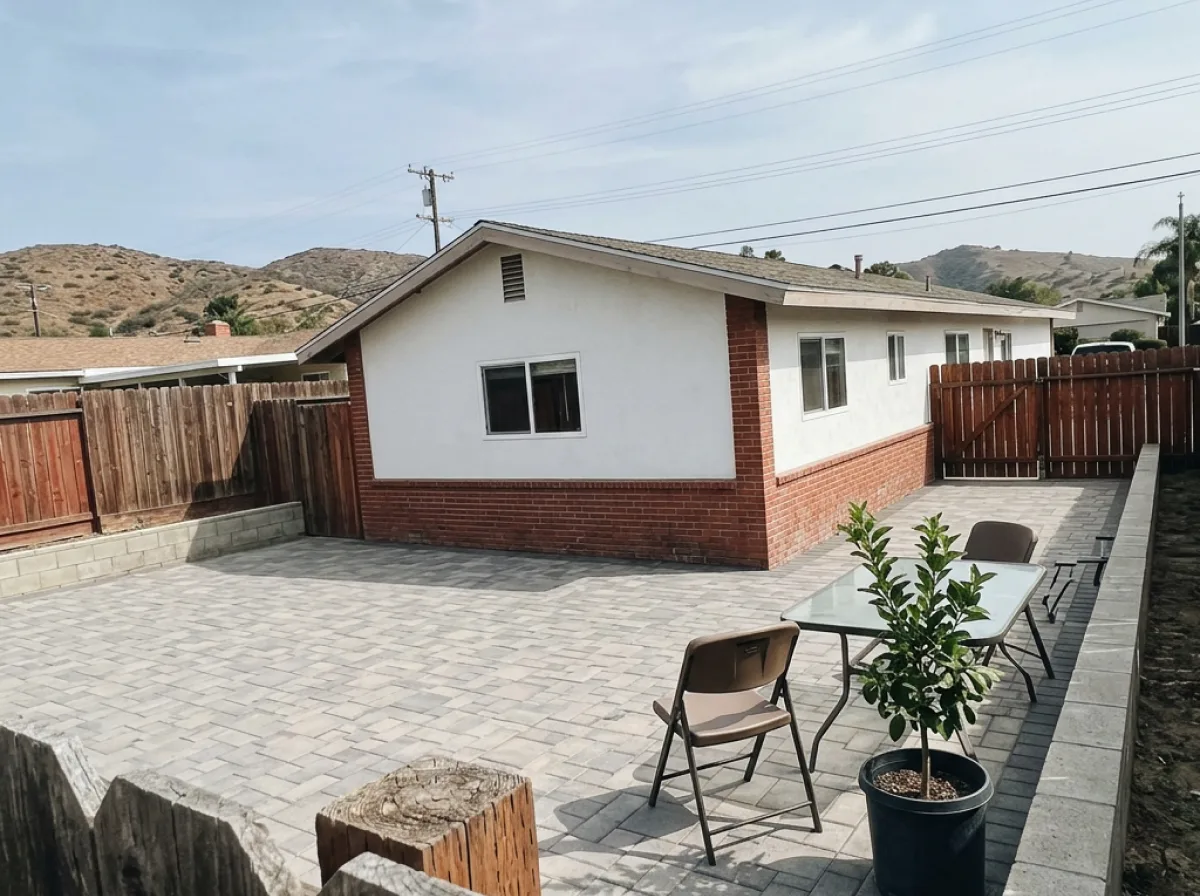
P-02 Paver driveway installation at a San Diego home

What We Build

Everything a Driveway Is Made Of

The drive surface, the apron, the edges, and the water under it.

Paver Driveways

Interlocking pavers on a deep compacted base, laid in the pattern that resists turning loads.
Stamped Concrete Drives

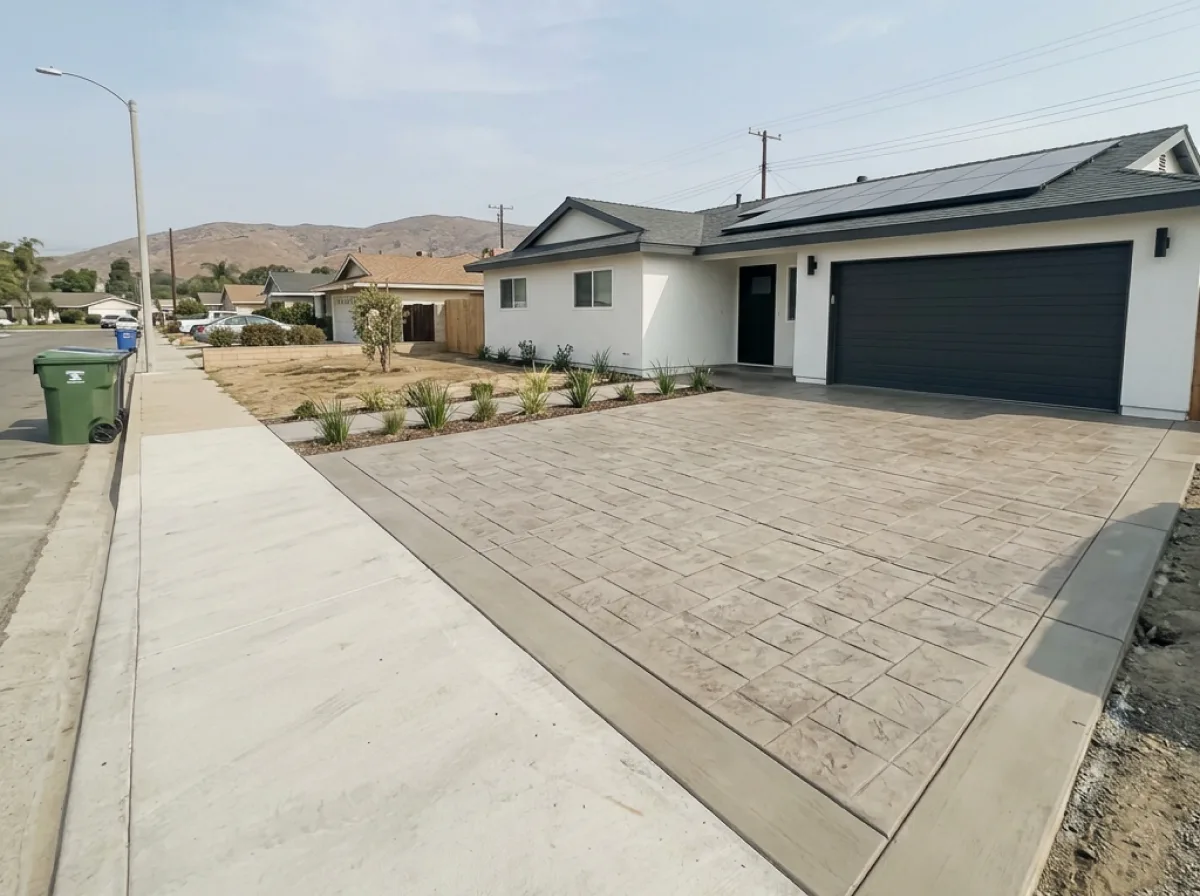
A poured drive with pattern and color stamped in, jointed for the section it carries.
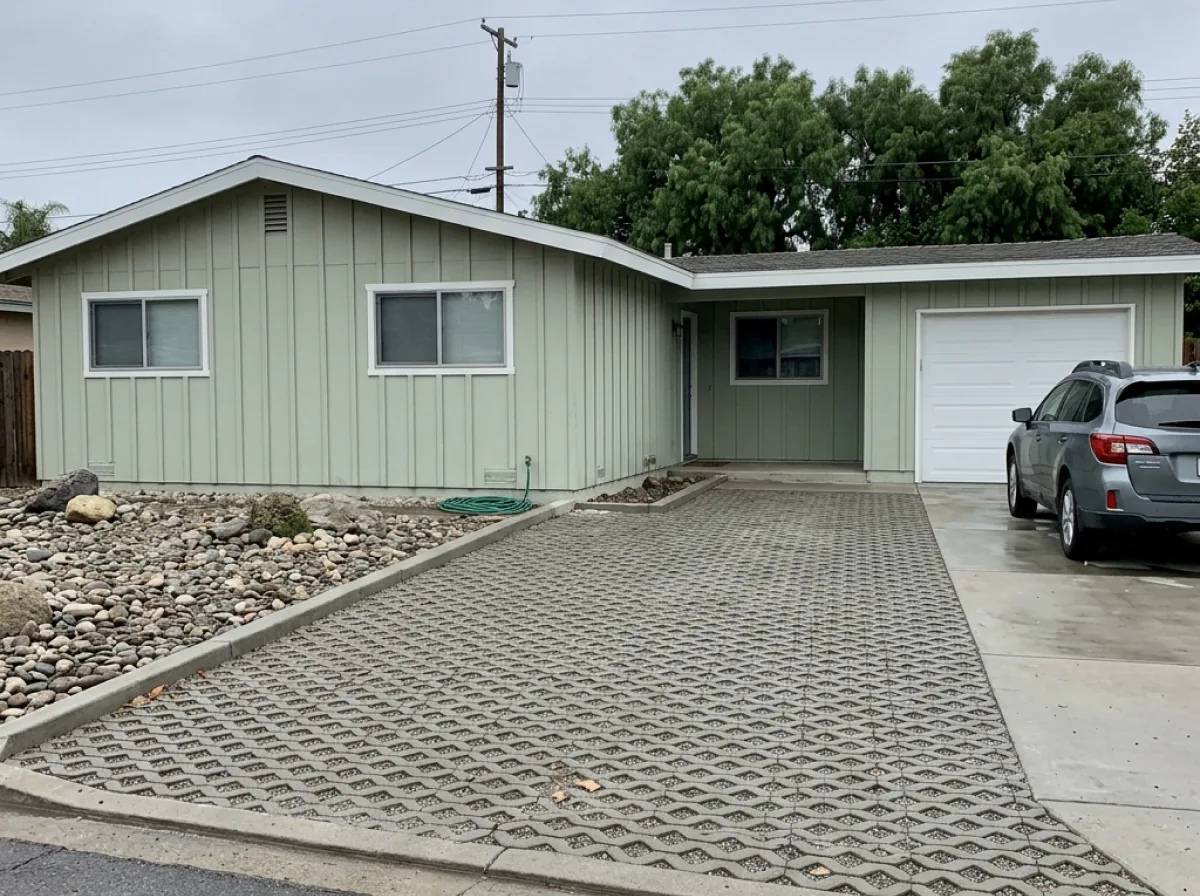
Permeable Driveways

Open-jointed systems that take stormwater down through the drive instead of to the street.
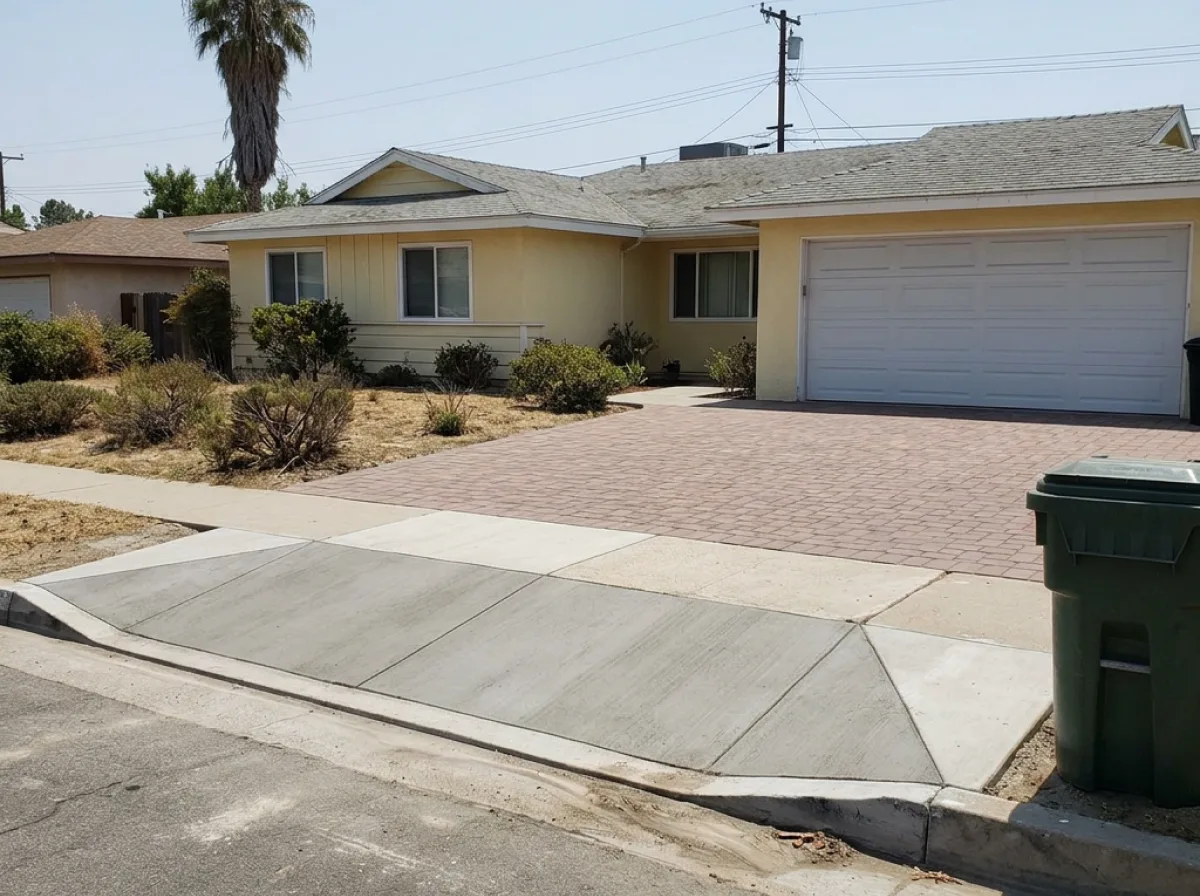
Driveway Aprons

The strip between sidewalk and street, where the city usually has a say before you do.
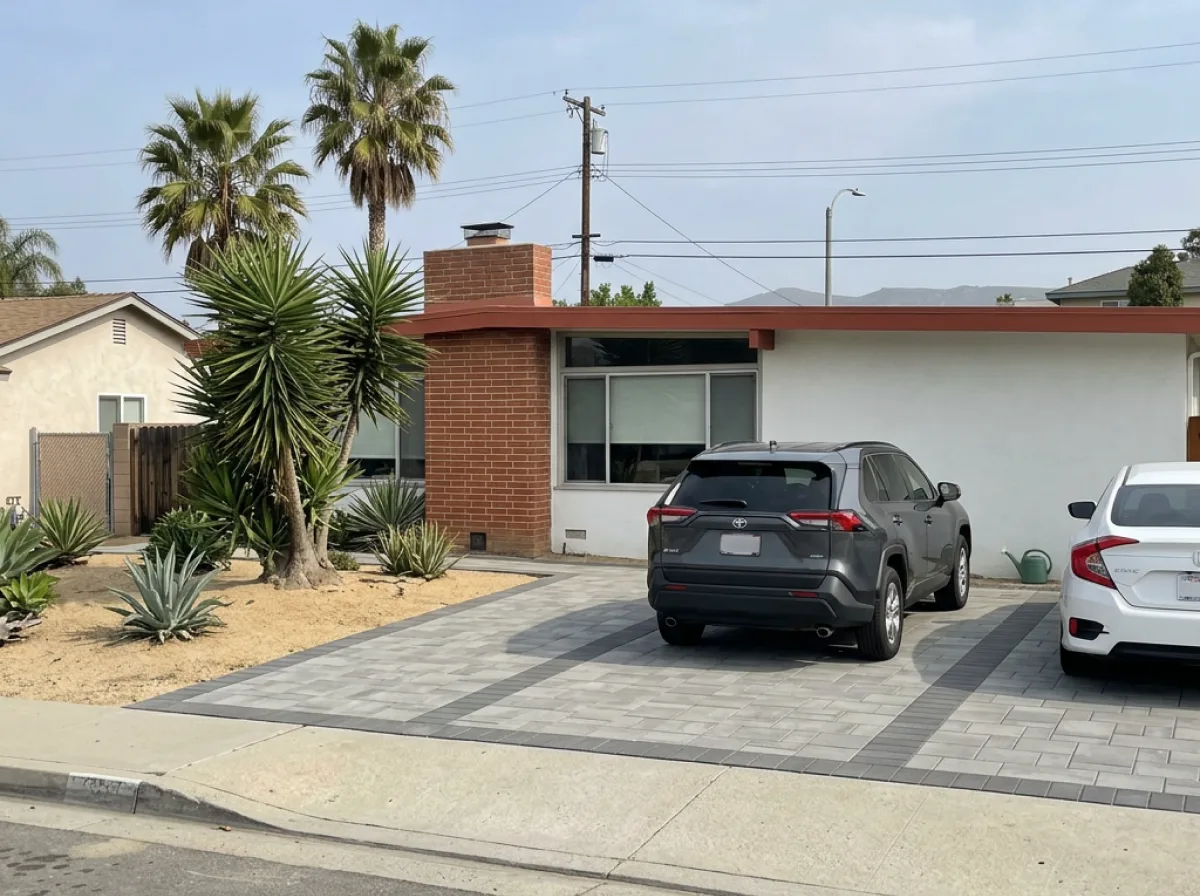
Widening & Turnarounds

Extra width for a second car, a backing area, or a turn that does not use the lawn.
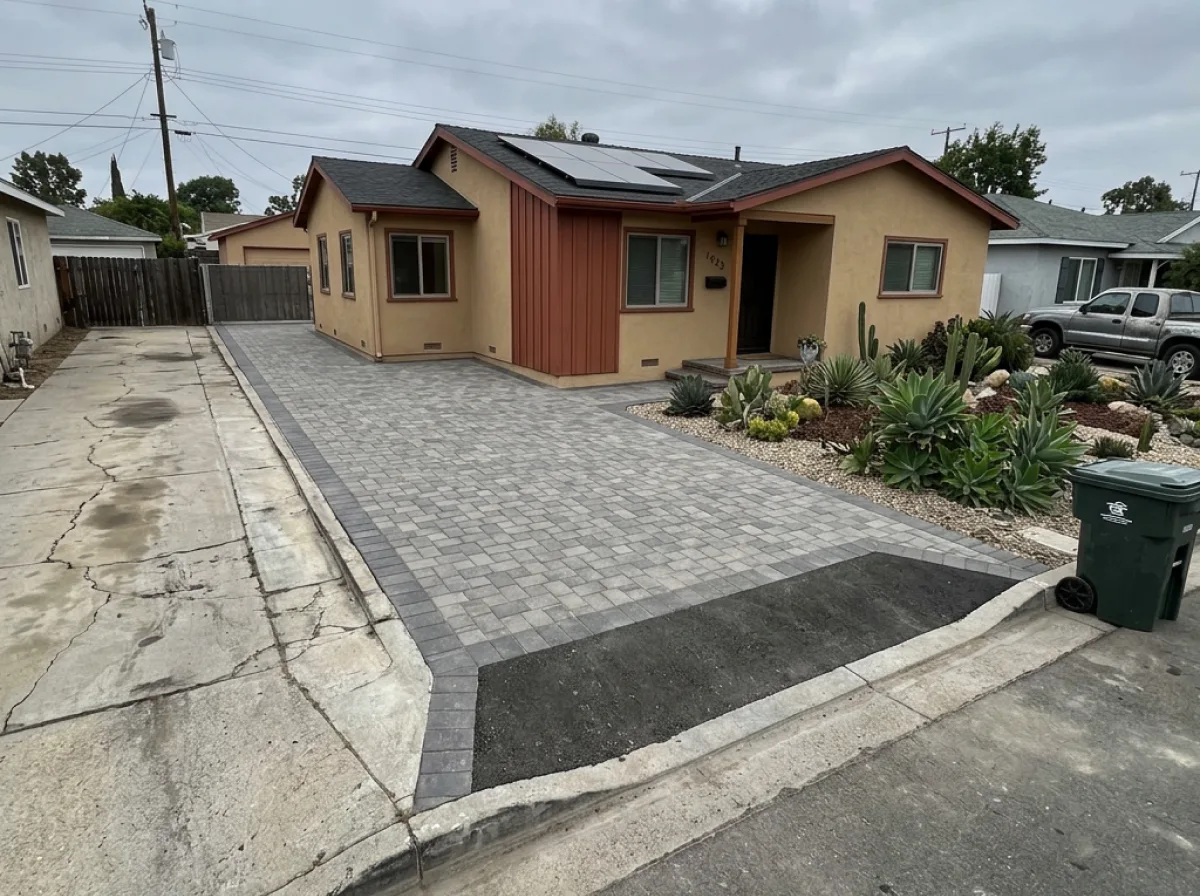
Repair & Replacement

Cracked, rutted, or sunken drives taken back to subgrade and rebuilt properly.
Walkways Instead

Paths and steps carry people, not vehicles, and get a shallower build. Own page.
Pavers Everywhere Else

Patios, poolside, and garden surfaces in the same materials, on their own page.
How We Build

What a Driveway Needs That a Patio Does Not

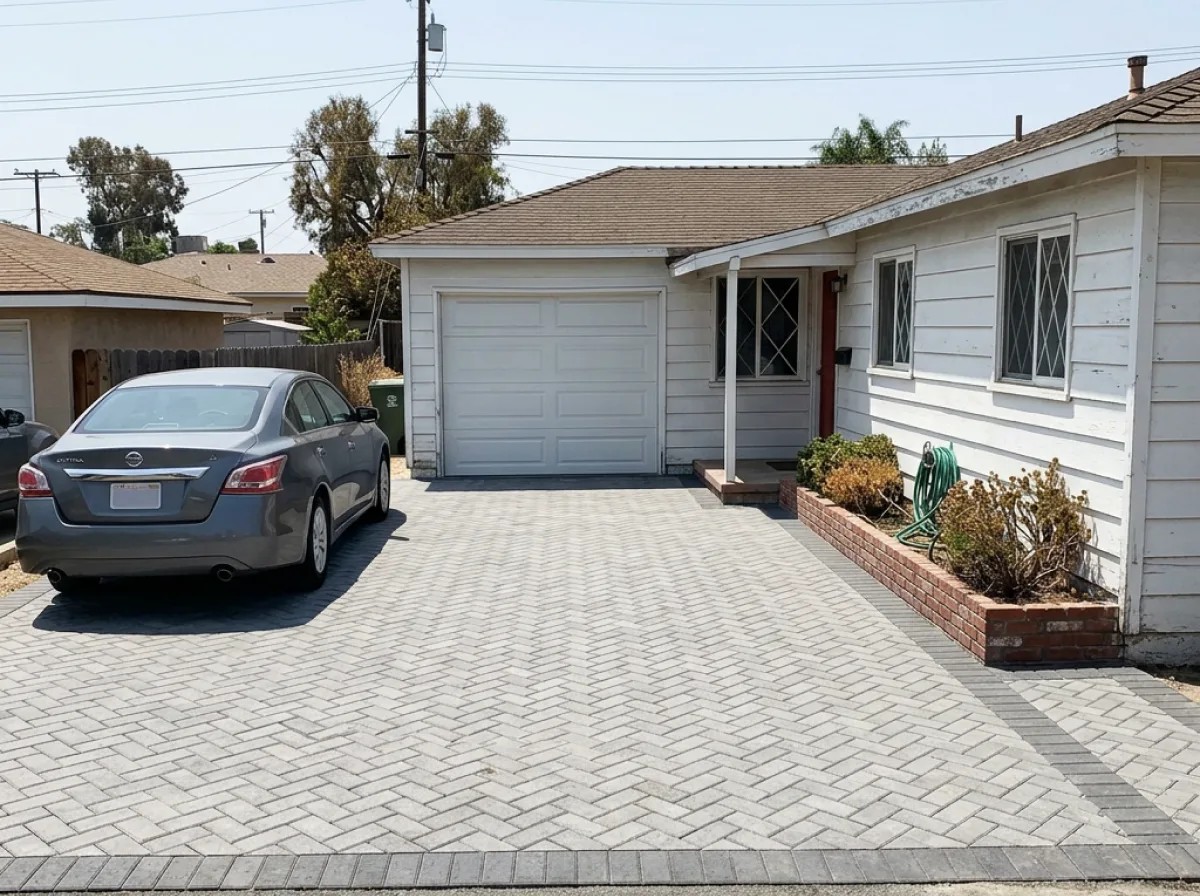
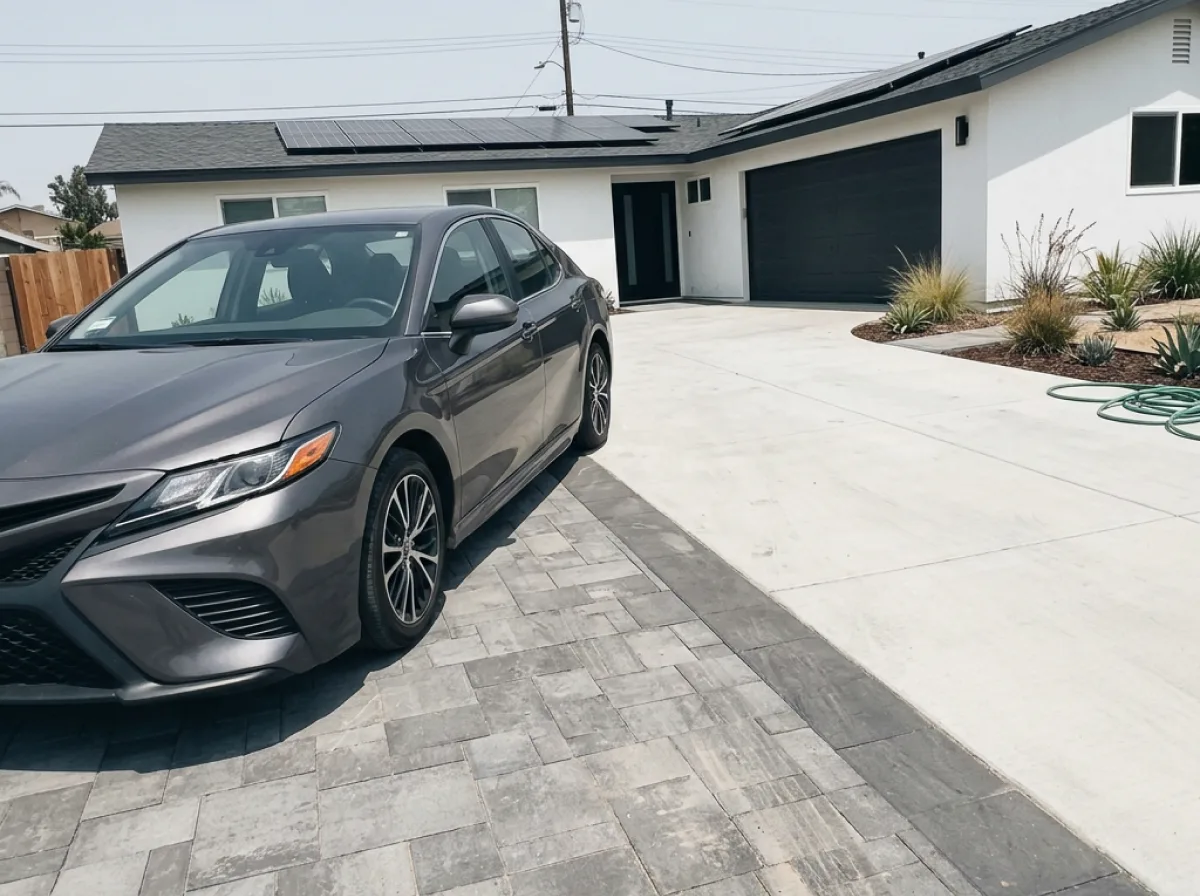
Car parked on a paver driveway built on a deep compacted base D-01 · Load
01 / Load

A Deeper Build Than It Looks

The visible part of a driveway is the thinnest part. What carries the vehicle is the compacted aggregate underneath, and a drive needs considerably more of it than a patio does. Cut that depth, and it ruts where the tires track.
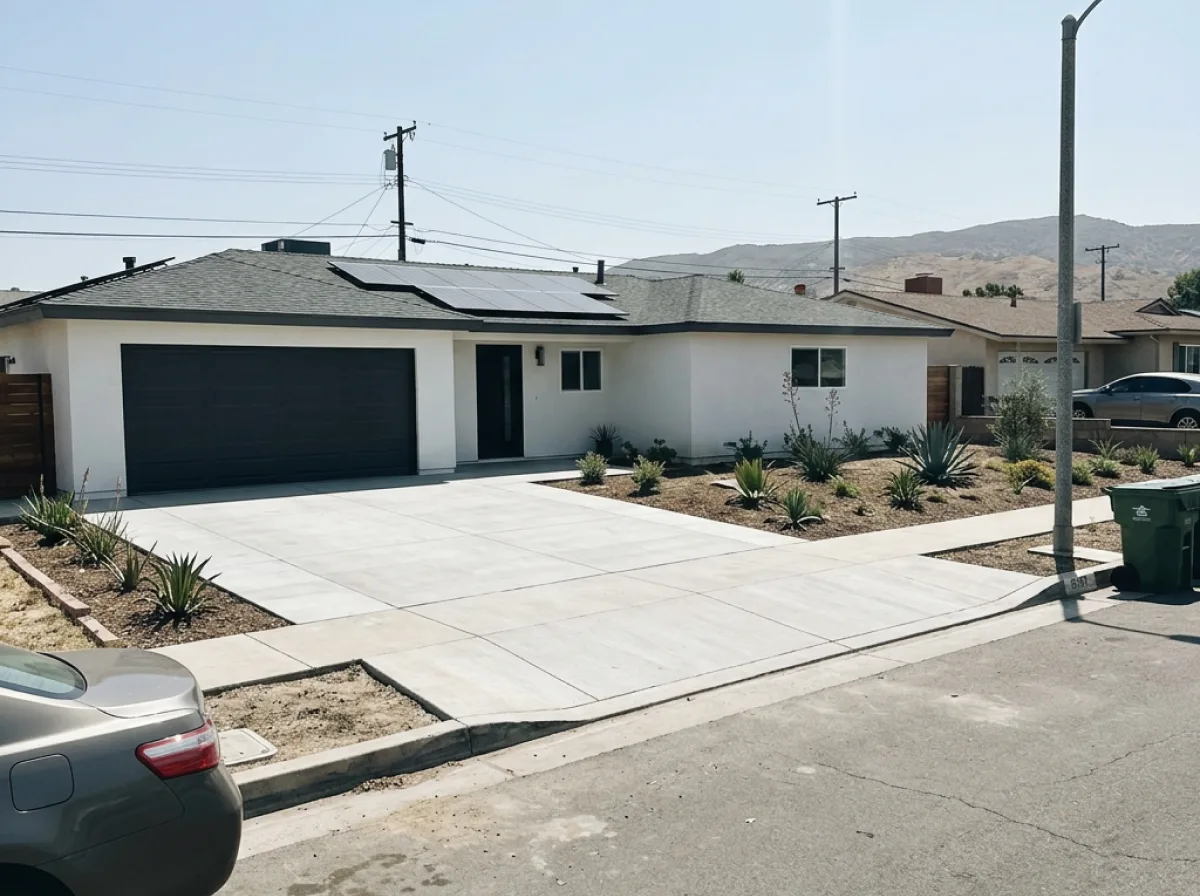
Driveway apron and curb cut where the drive meets the sidewalk and street D-02 · The Apron
02 / The Apron

Where Your Property Stops

The strip between the sidewalk and the street is usually not yours, and work in it is usually a separate approval from the one covering the rest of the job. Widening a drive or moving the curb cut raises the same question early.
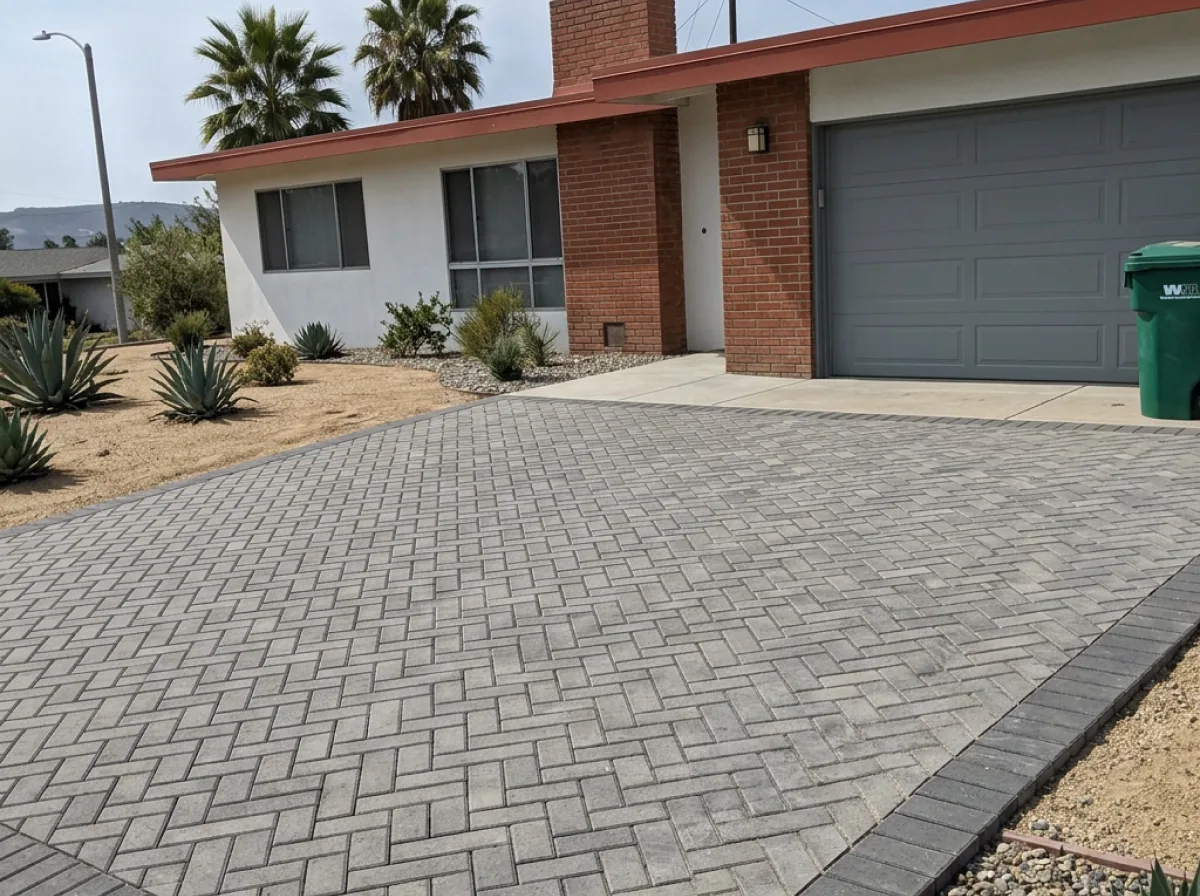
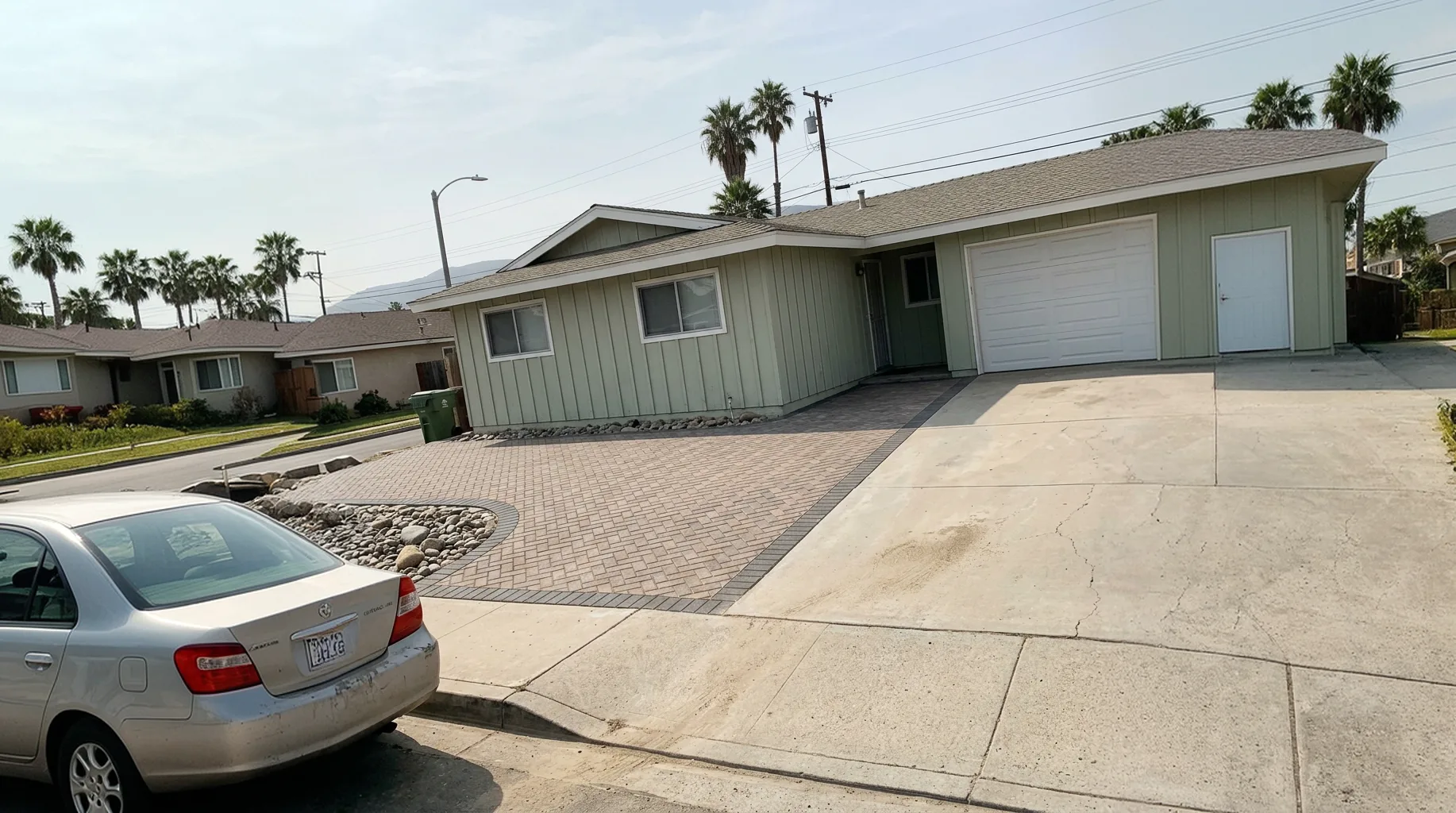
Herringbone paver pattern at the turn into the garage on a finished driveway D-03 · Pattern and Edge
03 / Pattern and Edge

Why Herringbone

Cars not only drive on a driveway but also turn on it, and a turning tire pushes the surface sideways. A ninety-degree herringbone locks the units against that. Running bond spreads under the same load.
Request a Consultation

Tell us about your SPACE

Share your project and goals below. Our team reviews every inquiry and follows up within one business day to schedule your design consultation.

To save your data, the contact form loads on request.

See It First

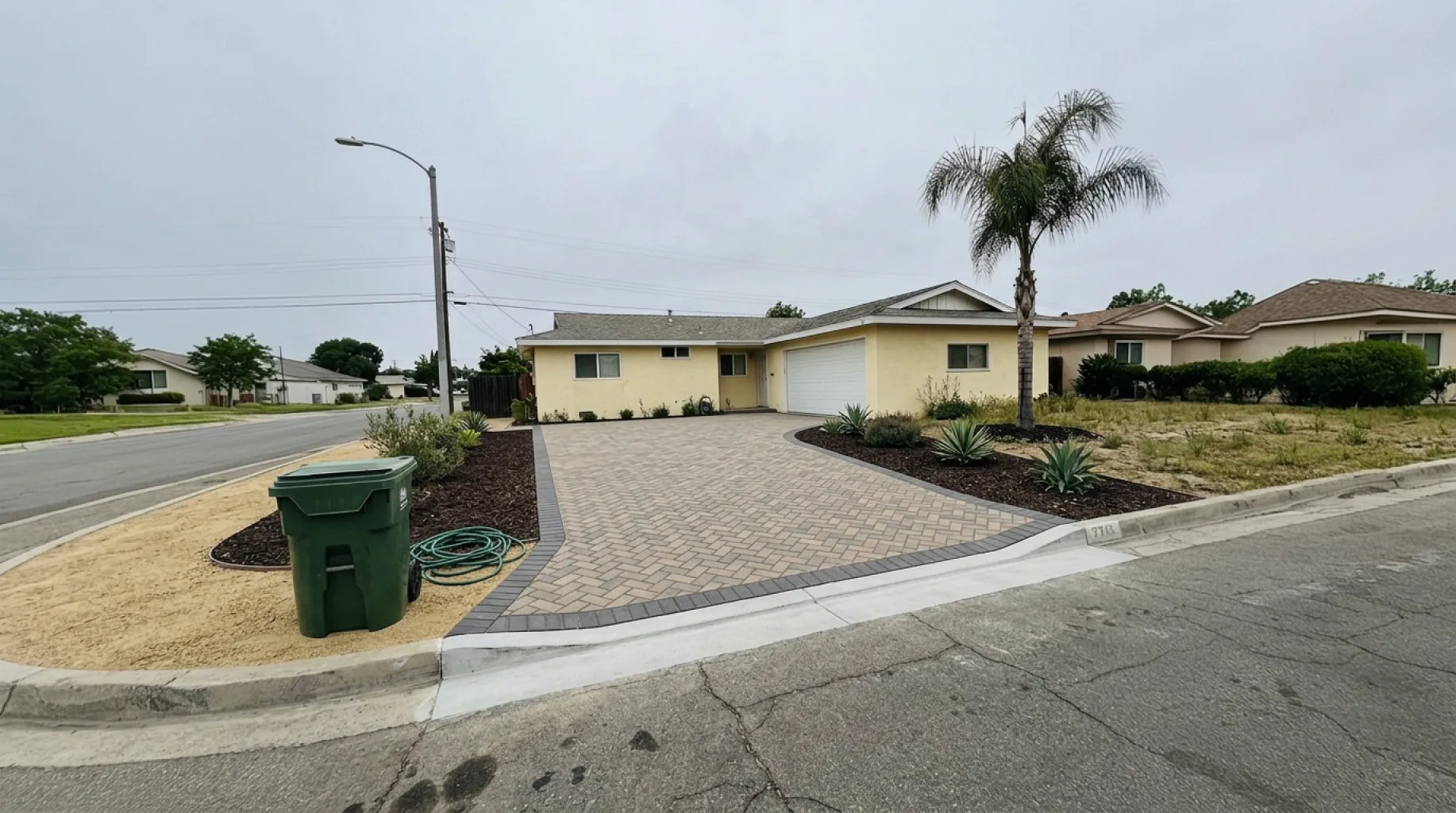
See Your New Driveway Before We Build It

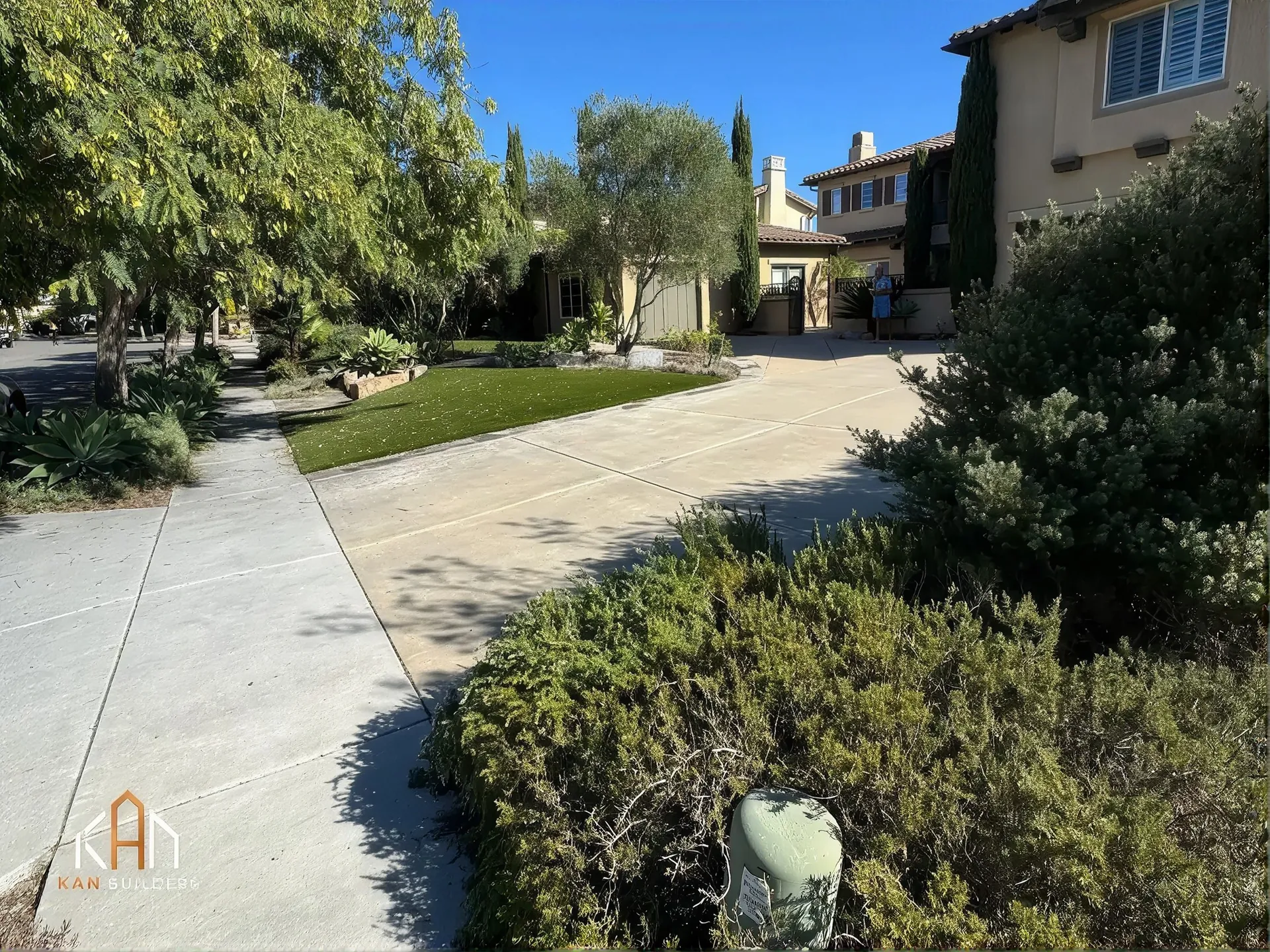
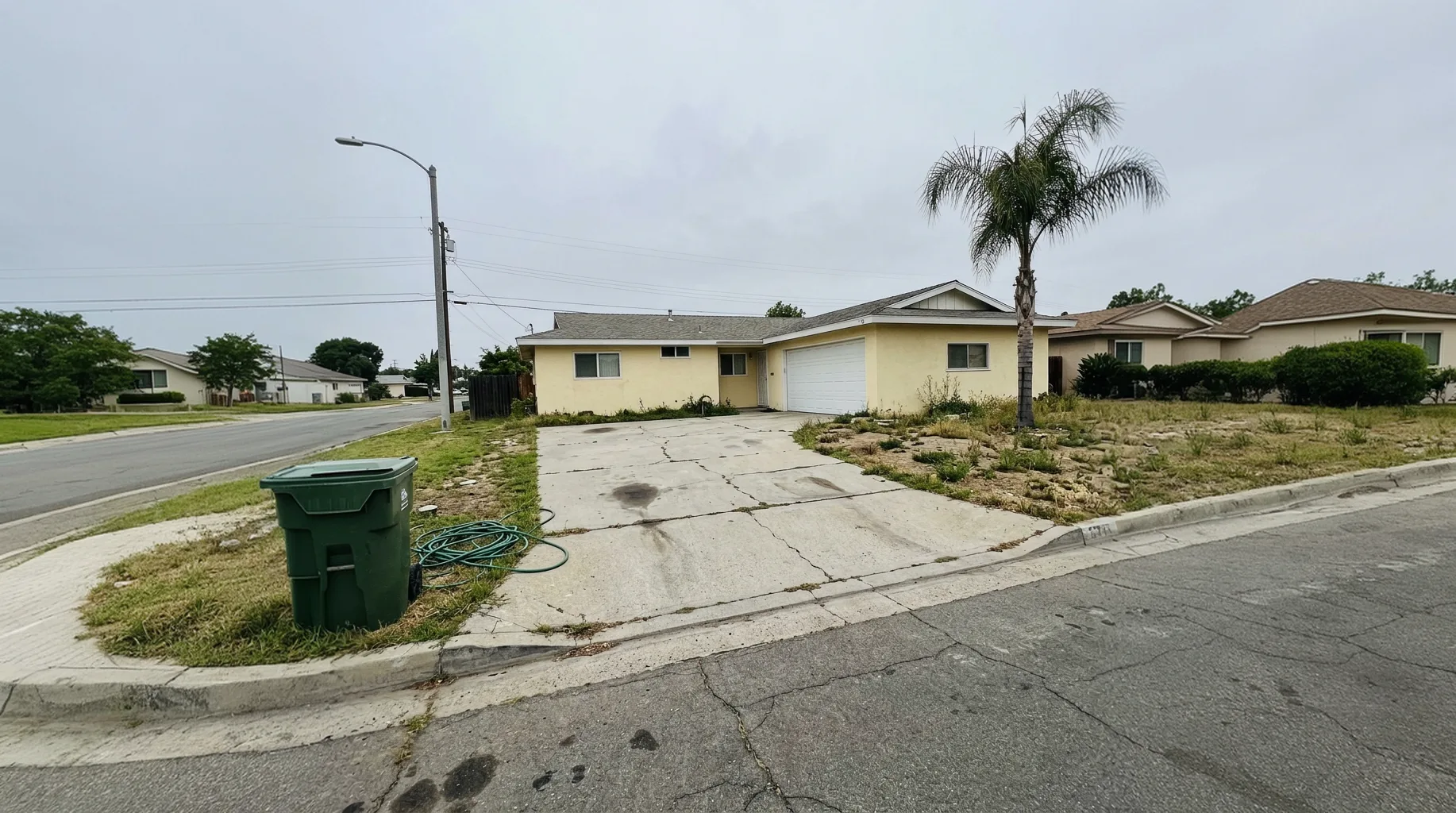
Homeowner's original street photo of the existing driveway
One photo in  ·  One rendering out

Recent Work

Driveways We Have Built

Costing Matters

What a Driveway Costs

A driveway is priced by the square foot like any hard surface, but the base is the half you cannot see.

Area & Layout

Square footage sets the baseline. Curves, borders, and tight cuts add labor per foot.

Material

Pavers, stamped concrete and permeable systems sit at three distinct price points.

Base & Excavation

Excavation depth and imported aggregate, set by the soil and the load the drive carries.

Demolition & Haul Away

Breaking out the existing driveway and the tonnage that leaves the site.

Apron & Approvals

Work in the right-of-way is priced separately and runs on the city's timeline, not ours.

Slope & Access

Grade changes, the transition at the street, and whether machinery reaches the work.

Every driveway estimate states base depth, edge restraint, and the laying pattern. Those three lines are where cheap quotes save money, and where a drive ruts inside four years.

CLIENT REVIEWS

TRUSTED BY SAN DIEGO

COMMON QUESTIONS

Driveways, Answered

Pavers or stamped concrete for a driveway?

Different, rather than better, and the deciding factor is usually how you feel about repair. Stamped concrete costs less to install, gives you a continuous surface with no joints to maintain, and will eventually crack, at which point the repair is visible and the pattern will not match. Pavers cost more up front, flex with ground movement instead of cracking, and any unit that stains or cracks lifts out and gets replaced from the spares we leave you. On a driveway, that difference matters more than on a patio because the surface takes more abuse.

Will a paver driveway sink or rut over time?

Not if the base and the edges are right, and those are the two places a cheap quote saves money. Rutting in the tire tracks means the base was too shallow or compacted in one pass rather than in lifts. Units creeping sideways near the turn into the garage means the edge restraint is missing or undersized. Both are build decisions, not material decisions, which is why our estimates list base depth and edge restraint as separate lines, and why we would rather lose a bid than match a quote that leaves them out.

Do I need a permit to replace or widen my driveway?

Replacing like-for-like on your own land often does not need one. The part that usually does is the apron, the strip between the sidewalk and the street, which in most cities is public right-of-way rather than your property, and anything that changes the curb cut, which includes most widening. Those run on the city's process and the city's timeline. We establish where your property line actually sits before we price the job, so the approvals are in the schedule from the start instead of appearing halfway through.

Can you widen my driveway or add a parking pad?

Usually yes, and it is one of the most common jobs on this page. The limits are setbacks, how much of the front yard the city allows to be paved, and whether the widening requires a wider curb cut, which is the part that turns a simple job into an approval process. A parking pad beside the existing drive avoids the curb-cut question entirely and is often the cheaper solution to the same problem. We will tell you which of the two your lot actually supports.

What about oil stains and sealing?

Pavers handle this better than concrete because a unit that stains after cleaning can be swapped for a spare rather than patched. Sealing is optional on both and does two things: it slows staining, and it deepens the color. It also has to be redone periodically, so it is a maintenance commitment rather than a one-off. We will tell you what sealing will and will not do for your material before you decide, rather than selling it as standard.

How long does a driveway take, and can I park during it?

Plan on being without the driveway for the whole of it, which is the part people underestimate. Demolition, excavation, base, and compaction take most of the schedule, and the surface goes down near the end. A poured drive needs curing time before a vehicle goes on it, whereas a paver drive does not, and that difference often decides the material for a single-car household. We give you the no-parking window at the quote stage, not on the first morning.

Start the Conversation

Build With a Team That Draws First

Send one photo of the space and a rough idea of the area. We will measure it, draw the layout, and price it honestly.
Call (858) 264-0358