

Two homes on your street catch your eye for different reasons. One shows a broad paver patio set tight to the kitchen, with a grill, table, and shade that see use four nights a week. The other shows a composite deck that lifts over a slope, catches sunset, and turns dead grade into living space. Both look sharp, but you want more than looks. Which surface gives you more use every day and more pull with buyers later? How do you weigh patio vs deck for your San Diego home without guesswork?
San Diego lots add a twist that photos hide. Slope, side access, and salt air shift cost, lifespan, and care. Hence, this guide breaks down real numbers for cost, durability, and return, with lot-specific fit.
Quick Snapshot: Patio vs Deck Value at a Glance
A paver patio costs less at the start, sits on a compacted base, and handles heat well with a light tone and shade. On the other hand, composite decking costs more up front, lifts above the slope, and adds a level floor where the ground falls away. In fact, flat lots often gain strong value from a patio, while hillside lots gain more from a deck that creates usable area. In the end, patio vs deck value comes down to lot shape, access, and how you live outside through the year.
How a Patio and a Deck Work on San Diego Lots
Your lot decides more than style. Door height, grade change, and side access drive what builds clean and what needs extra labor. In addition, city rules set footing depth, guard height, and drain path that shape scope and budget.
Patio at Grade
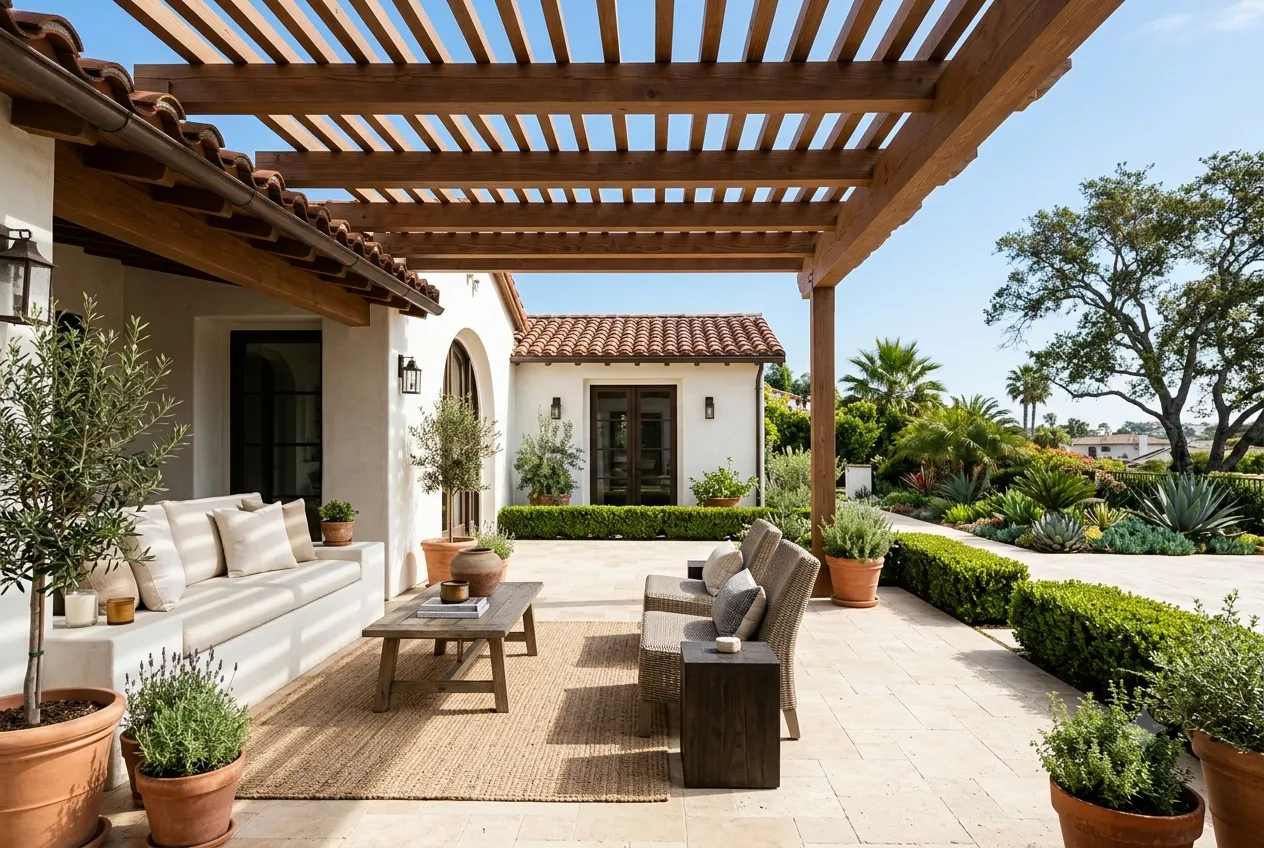
Patios sit at grade on compacted rock and sand. Crews dig 6 to 8 inches, compact in lifts, screed sand, and lock pavers with polymeric sand. That base lets water move through joints and keeps the surface flat through heat and small soil shifts. You place a patio close to the kitchen for short carry and fast host. That close link makes patio remodeling in San Diego a top pick for dining zones. For base depth and layout tips, see our guide on how to plan a patio remodel in San Diego.
A patio suits flat to mild-slope yards where you want broad, open floor at low entry cost. With the right pitch and edge restraint, it holds for decades and stays cool underfoot.
Deck Above Grade
Decks lift above grade on posts, beams, and joists. That lift levels a slope without heavy cut and fill. Composite boards hold color in sun, shrug off salt air, and need just soap and water. Wood brings warm grain but needs a seal on a set cycle to hold tone and fiber. When you weigh maintenance and heat, review choosing wood vs composite decking for upkeep in coastal air.
Solid deck construction in San Diego includes deep footings, stainless hardware, and ledger flashing per city code, which keeps the frame safe in quakes and wind. Guard hits 42 inches when the deck sits over 30 inches above grade, and stairs need a solid handrail and light.
A deck suits steep lots, high doors, or tight side yards where a patio would need major grading. It creates a level living area where none exists and can frame a view.
Now, with both forms clear, you can compare cost and return with real numbers.
Patio vs Deck: Cost, Life Span, and Return Compared
Buyers love usable outdoor rooms, but appraisers look at build quality and life. Cost per square foot tells part of the story. Lifespan and upkeep tell the rest.
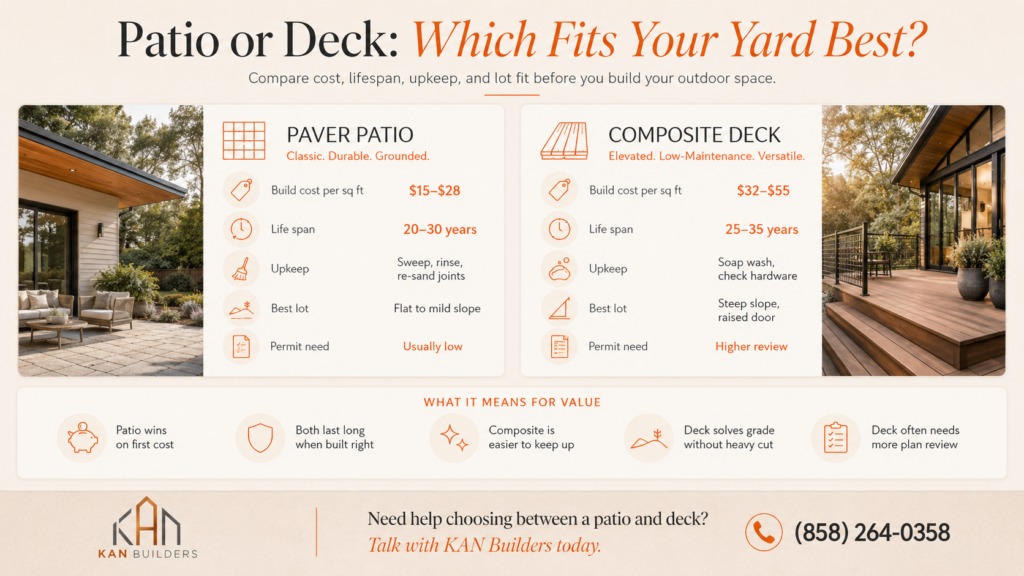
For instance, a 400-square-foot patio at $22 per square foot runs about $8,800 for surface plus base and labor. Meanwhile, a 400-square-foot composite deck at $45 per square foot runs about $18,000 for frame and surface plus footings. That gap explains why the cost of a deck vs patio matters at first bid. For this reason, a patio often wins on entry cost, while a deck wins when slope makes grade unusable.
In addition, a patio that adds 400 square feet of dining at low cost lifts day-to-day use right away. A deck that adds 300 square feet of level floor where no flat yard exists lifts usable area by a third. Appraisers note the new living area and low-water design. In the end, long-term value still comes from a quality base for the patio and solid footing and flashing for the deck. When you vet licensed and local deck builders, ask for footing depth, hardware specifications, and drain plan, not just board brand.
Outdoor remodeling in San Diego that combines both, patio for dining below and deck for lounge above, often yields best use and strong buyer pull. You can see that integration in real yards when you view our completed San Diego landscaping projects.
Cost and life set the base for fit.
Patio vs Deck: Which Fits Your Lot, Budget, and Use
Your routine decides more than square footage. Host needs shade, a short carry from kitchen, and a clear path for guests. So from here, you match surface to use, not just look.
Fit Checklist
- Choose patio when lot is flat, access is wide, and budget is tight
- Choose deck when slope is steep, door sits high, or view matters
- Choose patio for broad dining zone near kitchen
- Choose deck for lounge over uneven ground or over old concrete
- Add shade, light, and drain path to both for year-round use
For example, homes in Del Mar with flat backyards gain strong day-to-day use from a paver patio tied to turf and low-water planting. Homes on a slope in Mission Hills gain more from a deck that levels space and catches breeze. As a result, many owners phase work. The first stage adds a patio for dining and turf. The next stage adds a deck for lounge and views. That phase plan spreads spend and lets you test use before you add cover, fire, or kitchen. When you compare patio vs deck for real life, lot shape often decides.
Lot and routine point to one clear winner for your home, and a mix often wins overall.
FAQ: Patio vs Deck Questions From San Diego Homeowners
You hear mixed takes from neighbors and online boards. Clear answers help you move from debate to plan. Here are five questions we hear most in San Diego.
1. Which adds more resale value?
Value comes from usable area, not just surface. A patio adds value through low cost and broad dining use. Deck space creates a level living area where a slope would block use. Buyers notice the new area and low care, which lifts appeal.
2. Do I need a permit for patio vs deck?
Patios at grade with no cover, gas, or tall wall often need no permit. Decks with a ledger, footing, or guardrail over 30 inches above grade need plan check. City review covers footing depth, span, and guard height for safety.
3. How do I handle slope and water for each?
Patios need 2 percent pitch away from doors and a channel drain at thresholds. Decks need deep footings, proper span, and under-deck drainage so water moves away from posts and house.
For homes with past puddling, learn How to Identify and Fix Backyard Flooding in San Diego before you build in our next guide.
4. What lasts longer near salt air?
Pavers hold up to salt and shift with soil when the base is right. Capped composite holds color in the sun, resists salt, and needs just soap and water. Wood can work but needs a seal on a set cycle to hold tone and fiber.
5. Can I build both and stay on budget?
Yes, many owners phase work to spread spend. First stage adds patio for dining and turf. Second stage adds deck for lounge and view. That split lets you test use before you add cover, fire, or kitchen.
Final Take: Patio vs Deck Value That Holds
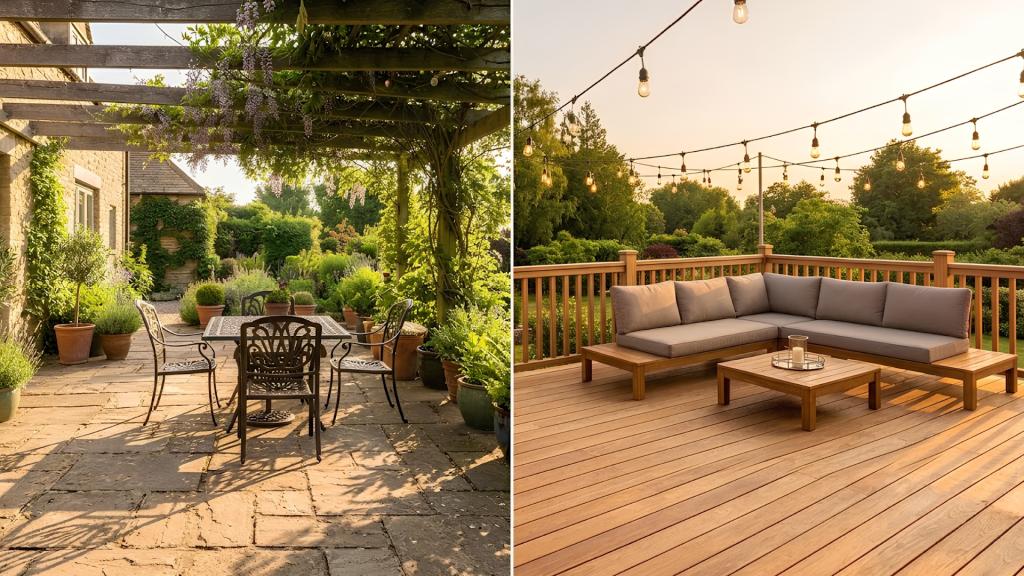
Both paths add real value when you build for lot and life. A paver patio gives you low entry cost, broad dining space, and simple upkeep on flat ground. Composite decking gives you level space on slope, strong appeal, and clean lines that hold color in sun and salt. Therefore, you pick based on grade, access, and how you live outside, not just trend.
KAN Builders brings two decades of outdoor build in San Diego, from base to finish. We size footings right, flash ledgers tight, and pitch patios for drain, so your new space holds up and feels right from day one.
Ready to Build Value That Lasts?
Ready to bring your dream outdoor living space to life? Call KAN Builders today at (858) 264-0358 to schedule an on-site consultation!
We design custom outdoor living and landscaping services in San Diego that fit your lot, code, and budget, from paver patios to composite decks.
Visit www.kanbuildersinc.com to lock in fall pricing before the spring rush.