
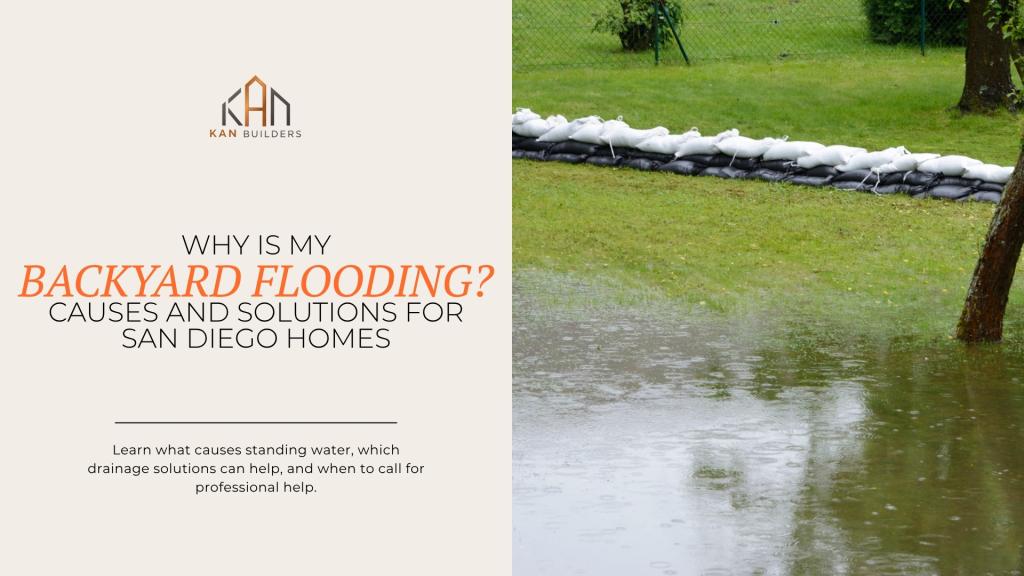

Backyard flooding in San Diego can stay hidden through a dry August, then show up fast when the first strong rain leaves puddles beside the patio, muddy paths, or water creeping toward the house. Even short winter storms can push water toward your home when grading and drains fail. That standing water can stain hardscape, drown plants, and seep into foundations. This guide explains why backyard flooding happens, what to look for, and which fixes actually work for San Diego homes.
Think of this: You step outside after a light rain and your lawn squishes like a sponge. The patio holds a thin sheet of water, mulch floats to one corner, and your side yard smells damp for days. Is this normal for San Diego? Do you need to fix it now before it gets worse? Before San Diego’s wetter months arrive, check whether your yard is ready to handle runoff.
Backyard Flooding in San Diego: What to Know First
Backyard flooding happens when water cannot soak in, move away, or reach a working drain fast enough. It usually comes from low or flat grading, compacted clay soil, and downspouts that dump water next to your foundation. In addition, clogged area drains and large patios add runoff that has nowhere to go. As a result, water pools, turf stays soggy, and soil stays saturated. Still, the right fix depends on the source, so adding gravel or a drain without checking the whole site can miss the real problem. That is why the first step is to spot the pattern, not just the puddle.
Common Signs You Have a Backyard Flooding Problem
A soggy lawn after rain is easy to spot, but small clues show up much earlier. You want to catch them in late summer while work is easier.
Look for these warning signs around your home. First, check where water sits after you run sprinklers for 10 minutes. Next, walk your fence line and look for washed-out mulch or soil lines on the fence boards. Then, check your patio and deck posts for water stains or green algae.
Warning Signs Checklist
- Water stands for more than 24 hours after rain or irrigation
- Mulch, soil, or gravel migrates to one corner or against the house
- Mosquitoes, mushrooms, or sour soil smell in the same area
- Doors and gates swell or stick after wet weather
- Downspout water shoots straight onto soil or hardscape
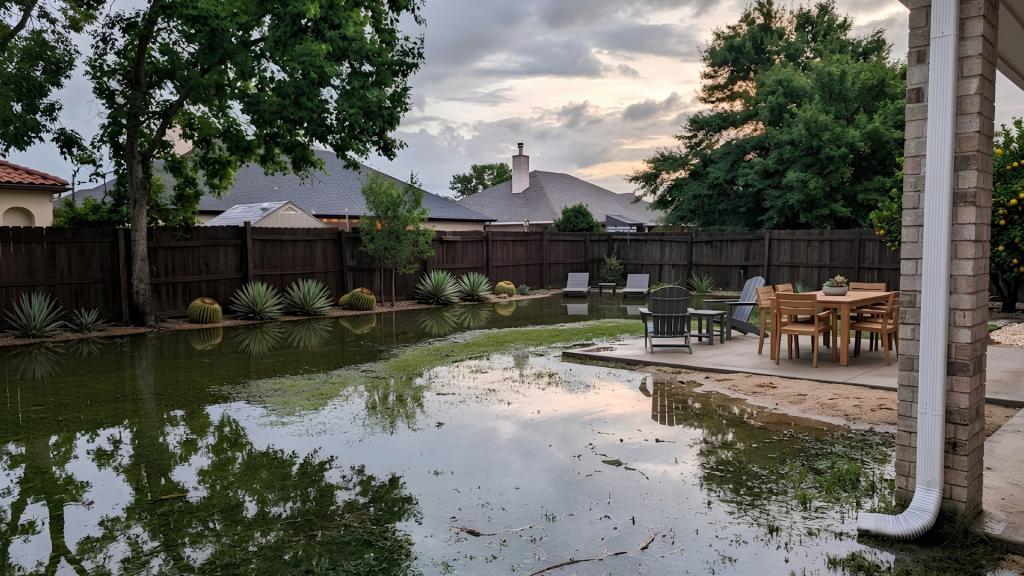
If you see two or more signs, you likely deal with backyard flooding tied to slope or drain capacity. That pattern points to a deeper grading or collection issue, not just heavy rain.
For many San Diego homes, those signs trace back to a few root causes.
Main Causes of Backyard Flooding in San Diego Yards
San Diego yards face a unique mix. Coastal homes in La Jolla and Pacific Beach sit on sandy clay that drains fast at first and then seals. Inland homes in Clairemont and Mission Valley sit on dense clay that holds water near the surface. In both cases, small grading mistakes create big puddles.
1. Grading and Slope That Sends Water Toward the House
Your yard should pitch away from your foundation at about 2 percent, which equals roughly 1/4 inch per foot for the first 5 to 10 feet. When that pitch is flat or reversed, water runs back to your patio and door.
Therefore, we often see yard grading issues where a past remodel added a patio or planter without resetting the slope. As a result, you get standing water in yard areas right where you entertain.
2. Compacted Soil and Extra Runoff
Clay soil compacts under foot traffic and new construction. Once compacted, it acts like concrete and rejects water. Meanwhile, roofs, driveways, and large patios add runoff volume. A 1,000-square-foot roof sheds about 600 gallons in a 1-inch rain. When that water lands on compacted soil, it sheets across the surface instead of soaking in.
3. Downspouts, Clogged Drains, and Hardscape Edges
Downspouts that end at the foundation dump all that roof water in one spot. Area drains clog with leaves, pet hair, and small rocks, so they back up during the first fall storm. Hardscape edges without a channel drain trap water against your slider. In addition, poor connections between patio, turf, and planting beds let water sit with no exit. That combination creates classic yard flooding after even a modest storm.
Understanding the cause helps you pick a fix that lasts, not just a quick patch.
Backyard Flooding Solutions That Work
You want a solution that moves water away and keeps it away. That usually means a mix of regrading and a collection system.
Here is how common options compare for San Diego lots.
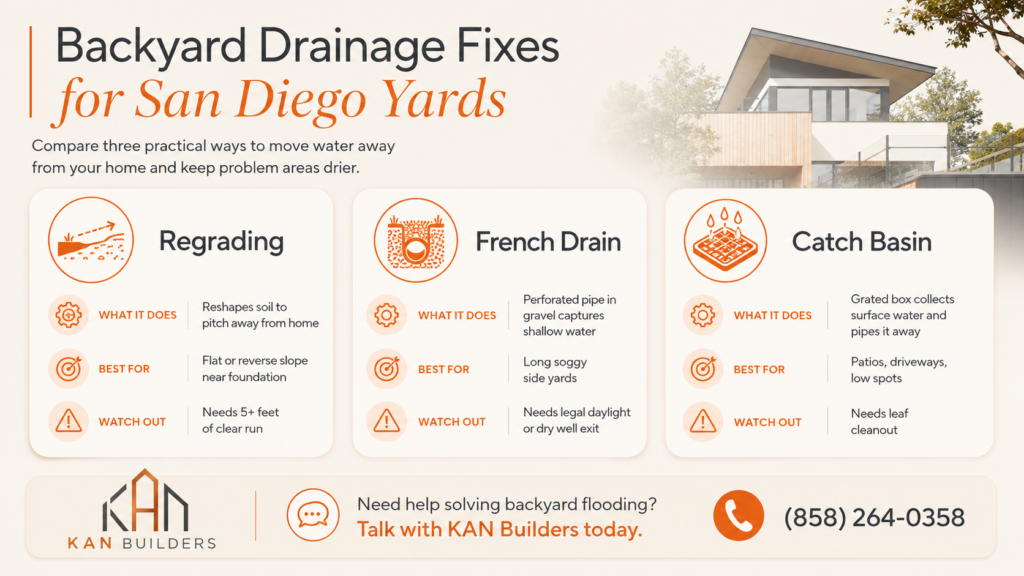
A French drain in San Diego works well along fence lines and behind retaining walls where water seeps through soil. The pipe sits 12 to 18 inches deep in washed gravel and carries water to a curb, dry well, or approved discharge. Catch basin drainage works better where water sheets across hardscape. The basin sits flush with the patio, catches surface flow, and sends it through solid pipe to an exit.
In addition, you often need both. For example, we regrade the first 8 feet around your home, add a catch basin at the patio edge, and run a French drain along the low side yard to intercept subsurface flow. That layered approach reflects good landscape drainage practice and meets San Diego code for discharge.
If you plan a full yard refresh, review How to Plan Your Backyard Landscaping in San Diego first so slope, hardscape, and planting work together. For homes planning new hardscape, a solid plan for backyard remodeling in San Diego should include drain lines before you pour concrete, not after.
With the right choices and a licensed contractor, you solve pooling and protect your foundation at the same time.
When DIY Fixes Are Not Enough and Why to Act Before Rain
Small fixes help, but some problems need more than a bag of soil. You need a pro when water enters your home, when your yard drops more than a few inches toward the house, or when multiple drains back up at once.
DIY grading with a few bags of topsoil rarely holds because you need proper compaction and a steady pitch. In addition, flexible corrugated pipe kinks and clogs, which create new low spots. That is when poor yard drainage turns into repeat backyard drainage calls every winter.
Late summer is ideal for this work. Soil is dry, crews can dig without making ruts, and you can test your fix with a hose before the first big storm. Therefore, we recommend a full evaluation of yard drainage solutions in August and September. That timing lets you secure permits for retaining, curb cuts, or dry wells and finish before heavy rain.
For homes with slope and hardscape, you may talk to our remodeling experts to guide you on drainage solutions in San Diego and fall grading and retaining wall construction to see how slope and water work together.
Acting early saves hardscape, planting, and interior floors from water damage.
Final Check: Stop Backyard Flooding Before the Next Storm
Standing water is not just a nuisance. It kills roots, stains pavers, breeds mosquitoes, and pushes moisture toward your home. The fix starts with slope. You need water to move away from your foundation. Next, you need collection. Catch basins grab surface flow; French drains grab shallow groundwater. Finally, you need a legal exit that carries water to the street, a dry well, or a rain garden.
KAN Builders has handled backyard flooding in San Diego for homes from Point Loma to Santee. We evaluate landscape drainage, design the right mix of grading and pipe, and build it to code so it holds through winter. If you plan hardscape, we tie drainage into your patio and retaining plan from day one, so you avoid costly rework.
Solve the Drainage Problem Before the Next Heavy Rain
Is water pooling near your patio, wall, or foundation every time it rains? Have quick fixes failed to stop the same wet spots from returning? KAN Builders can evaluate the source, grade, drains, hardscape, and runoff path before recommending the right solution for your San Diego property. We can also coordinate drainage work with larger exterior remodeling services when needed.
Do not wait for the first heavy fall storm to expose a problem you could address now. Contact KAN Builders or call (858) 264-0358 to schedule an on-site inspection. Visit www.kanbuildersinc.com to get started while late-summer conditions still make drainage work easier.